
Is Eyebrow Threading Safe After an Eyebrow Transplant?
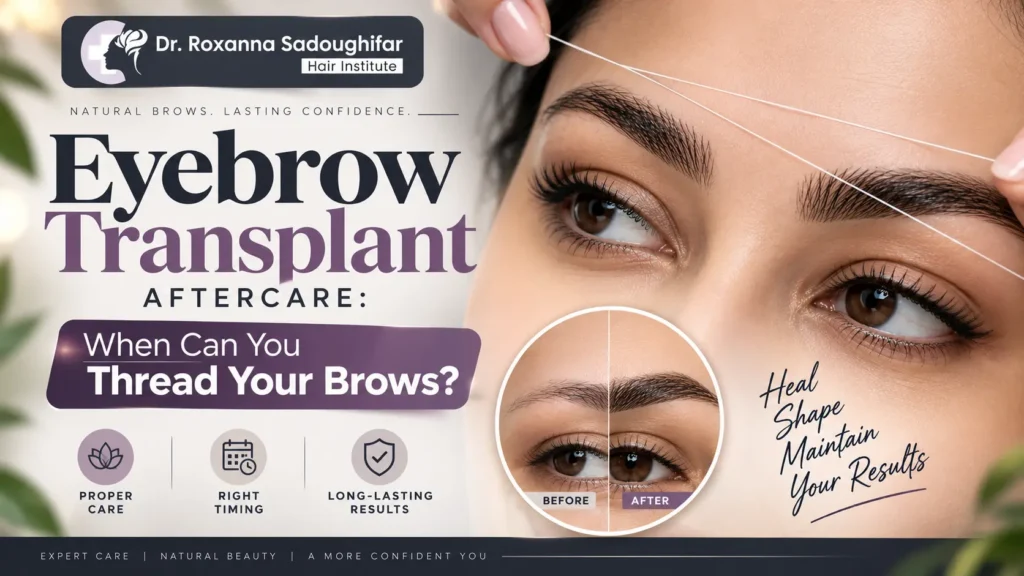
If you are considering an eyebrow transplant, one question you may have is: “Will I still be able to thread, trim, or shape my eyebrows after the transplant?” The answer is yes—but eyebrow maintenance after a transplant is slightly different from what you may be used to. An eyebrow transplant is designed to create fuller, natural-looking eyebrows using real hair follicles. However, because the transplanted hairs usually come from the scalp, they can continue to grow longer and faster than normal eyebrow hairs. This means that trimming and occasional shaping can still be part of your routine. The good news is that you don’t have to give up eyebrow grooming. Do You Still Need Threading After an Eyebrow Transplant? Yes, threading or professional shaping may still be possible after the transplanted eyebrows have fully healed and grown. However, the purpose of threading changes. Before an eyebrow transplant, someone with very sparse eyebrows may rely on makeup, pencils, microblading, or other cosmetic techniques to create the appearance of fuller brows. After a successful transplant, the transplanted hairs provide actual eyebrow density. Threading is mainly used to clean up unwanted hairs and maintain the shape, rather than create the entire eyebrow appearance. Your doctor may also recommend being careful about aggressive plucking or threading, particularly around newly transplanted follicles. Why Do Transplanted Eyebrow Hairs Need Trimming? This is one of the most important things to understand before an eyebrow transplant. The transplanted hairs generally retain characteristics of the donor hair. Since they commonly come from the scalp, they may grow longer than natural eyebrow hairs. So, even after the eyebrow transplant has healed, you may notice that some hairs become too long. This doesn’t mean something has gone wrong. It simply means the hairs may need to be trimmed regularly to maintain a neat eyebrow appearance. Think of it like maintaining your haircut. The hair is still there and growing naturally—you are simply keeping its length under control. Can You Shape Your Eyebrows After the Transplant? Yes. In fact, eyebrow shaping can be an important part of maintaining your final appearance. The eyebrow design is normally planned according to your facial features, existing eyebrow pattern and desired appearance. Once the transplanted hairs have grown, careful shaping can help maintain that design. However, it is important not to over-pluck the transplanted hairs. The goal is to maintain the shape without unnecessarily removing the hairs that were transplanted to improve density. What About Threading, Waxing and Plucking? These methods are not necessarily completely off-limits, but they should be approached carefully. Threading Threading can be used for eyebrow shaping once the area has completely healed. It is generally better to have the procedure performed by someone experienced with eyebrow grooming after transplantation. Trimming Trimming is usually one of the most important maintenance steps. Because transplanted scalp hairs can grow longer, you may need to trim them periodically to match the length and appearance of natural eyebrow hairs. Plucking Plucking should be done carefully. Removing too many hairs can reduce the density you wanted from the transplant in the first place. Waxing Waxing around a transplanted eyebrow should be discussed with your doctor, particularly during the recovery period. The skin and follicles need time to heal properly before introducing potentially irritating grooming methods. When Can You Start Shaping Your Eyebrows? Don’t rush into threading or shaping immediately after the procedure. During the early healing period, the transplanted area can be sensitive and may have redness or small scabs. The transplanted hairs can also shed temporarily before new growth begins. Your doctor should tell you when it is safe to resume your normal eyebrow-grooming routine. Once the area has healed and the new hairs have established, regular trimming and carefully planned shaping can help maintain the appearance of your eyebrows. Will Threading Damage the Transplanted Hair? When performed appropriately after complete healing, routine eyebrow grooming does not automatically mean that your transplant will be damaged. The important point is how the grooming is performed and which hairs are being removed. If you repeatedly remove transplanted hairs unnecessarily, you may compromise the fullness you wanted to achieve. For this reason, it is useful to tell your beautician or eyebrow specialist that you have undergone an eyebrow transplant and ask them to preserve the transplanted density. What If You Want Very Defined Eyebrows? That’s possible too. A transplant does not mean you have to keep one fixed eyebrow shape forever. Your eyebrows can still be maintained according to your preferred appearance. The key is to establish a shape that works with your facial features and then maintain it without excessively removing the transplanted hairs. This is particularly important for people who previously had very thin or patchy eyebrows and are now enjoying increased density. Eyebrow Transplant vs. Constant Makeup and Microblading Many people with sparse eyebrows spend years using eyebrow pencils, powders, microblading or tattooing to create a fuller appearance. These options can change the visual appearance of the eyebrows, but they don’t create additional natural eyebrow hairs. An eyebrow transplant aims to provide real hair growth in areas where density is lacking. That means your daily routine can become much simpler. Instead of drawing your eyebrows every morning, you can have naturally growing hairs that only require basic maintenance such as trimming and occasional shaping. What If You Are Looking for an Eyebrow Transplant in Tehran? For people researching an eyebrow transplant without surgery in Tehran, Iran, it is important to understand that a true hair transplant involves transferring hair follicles. Non-surgical options such as microblading and cosmetic tattooing can create the appearance of eyebrows, but they do not restore actual hair follicles. If you are considering eyebrow restoration in Tehran, look for a doctor who can explain both the expected result and the long-term maintenance requirements. People searching for the best Hair doctor in Fereshteh Street Tehran may also come across Dr. Roxanna Sadoughifar, who provides hair restoration and aesthetic services in Tehran. Conclusion Yes, you
Long-Hair FUE Hair Transplant in Tehran, Iran Without Shaving
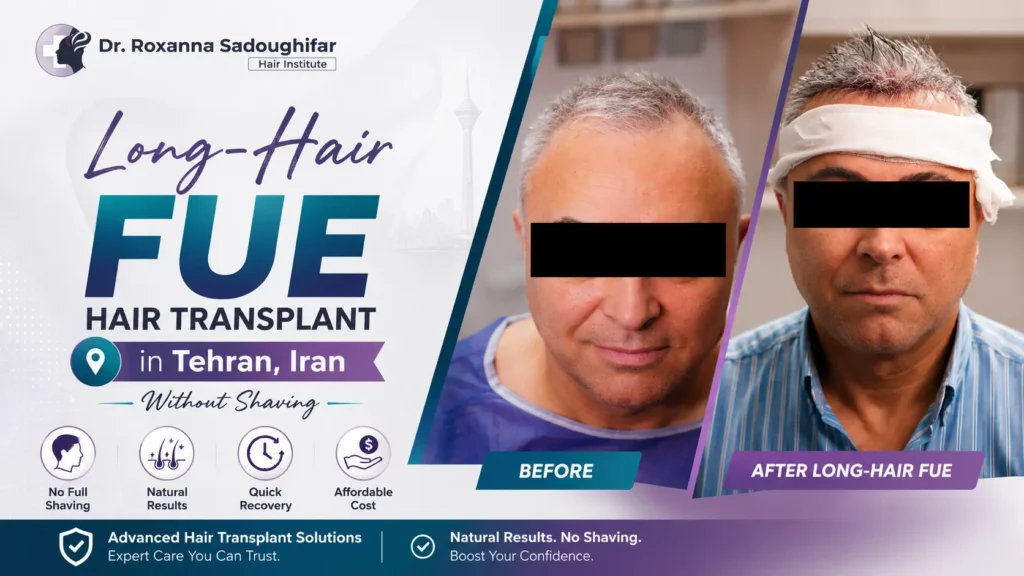
Are you considering a hair transplant but worried about shaving your head before the procedure? For many people, the thought of having their hair noticeably shaved is one of the biggest reasons they postpone hair restoration. Professionals, public-facing individuals, people with upcoming events, and anyone who simply wants to keep their hair transplant private may prefer a more discreet approach. At Dr. Roxanna Sadoughifar Hair Institute in Tehran, Iran, long-hair FUE hair transplantation offers a solution for appropriately selected patients who do not want the traditional shaved appearance. Also known as Long-Hair FUE, No-Shave FUE, or Unshaven FUE, this advanced approach is designed to harvest and transplant follicular units while preserving the visible length of the hair as much as possible. The goal is simple: restore thinning areas while helping you maintain a more natural appearance during the early stages of recovery. What Is Long-Hair FUE Hair Transplant? Long-Hair FUE is an advanced variation of Follicular Unit Extraction (FUE). In a conventional FUE procedure, the donor area is commonly shaved or closely trimmed to allow the surgeon to clearly identify and extract individual follicular units. With Long Hair FUE, specialized techniques allow selected grafts to be harvested while keeping the hair shafts long. The transplanted grafts can retain their visible hair length, creating what is often described as a “preview” of the transplant immediately after placement. However, patients should understand that the visible transplanted hair is not the final result. The transplanted hairs may shed during the normal post-transplant cycle, while the follicles remain in place and later produce new hair growth. Research and clinical literature describe long-hair FUE as technically demanding because working around long hair can make graft extraction and placement more difficult and time-consuming than conventional shaved FUE. Why Choose a Hair Transplant Without Shaving? The biggest attraction of Long-Hair FUE is discretion. Many patients do not want colleagues, friends, relatives, or clients to immediately notice that they have undergone a hair transplant. Keeping the existing hair longer can help camouflage extraction and recipient areas during the early recovery period. Long-Hair FUE Benefits : The main advantage is not that Long-Hair FUE produces inherently better final growth than conventional FUE. Instead, it offers a different aesthetic and practical experience during the procedure and early recovery period. Long-Hair FUE Gives You a Preview of the Transplant One of the most interesting features of Long-Hair FUE is the immediate visual preview. With conventional FUE, newly transplanted grafts generally contain a short hair shaft or are trimmed, so patients cannot immediately visualize how the longer hair will look. With Long-Hair FUE, the transplanted hair can remain long. This can help the patient and surgeon assess aspects such as: Scientific literature has specifically identified this immediate visualization as one of the major advantages of long-hair FUE. It is important to remember that this is a preview, not the final result. Transplanted hairs can shed after the procedure before the follicles enter their normal growth cycle. How Does No-Shave Long-Hair FUE Work? The exact technique depends on your hair characteristics, donor density, degree of hair loss, and the number of grafts required. Generally, the process involves: 1. Detailed Hair and Scalp Assessment Before recommending Long-Hair FUE, the surgeon evaluates: Not every patient is an ideal candidate for a completely unshaven procedure. 2. Hairline and Treatment Planning A natural-looking hairline is planned according to your facial proportions, age, existing hair characteristics, and long-term hair-loss pattern. The objective should not simply be maximum density. A successful transplant should create a result that looks natural and is designed to remain appropriate as you age. 3. Long-Hair FUE Graft Extraction Individual follicular units are carefully extracted from the donor region using FUE principles while preserving the hair length as much as the selected technique allows. Because the surgeon is working around long hair, the procedure requires greater precision and can take longer than conventional FUE. 4. Graft Preparation The harvested grafts are examined and prepared for implantation. The surgeon’s team aims to preserve the follicular units and organize grafts according to their characteristics. 5. Implantation The prepared grafts are placed into the recipient area according to the planned hairline, angle, direction, and density. Long-hair grafts can provide an immediate visual indication of how the transplanted area may appear. 6. Recovery and New Hair Growth The visible long hairs do not necessarily remain permanently attached to the transplanted follicles. Some transplanted hairs may shed during the normal hair-growth cycle. The follicles then enter their growth phase, with new hair gradually developing over the following months. Final maturation takes time, and patients should judge their transplant based on long-term growth rather than the immediate postoperative appearance. Who Is a Good Candidate for Long-Hair FUE? Long-Hair FUE may be particularly attractive to patients who: A consultation is essential because “no-shave” does not automatically mean that every patient can have a completely unshaven procedure. Depending on the patient’s hair characteristics and surgical plan, some techniques may involve limited trimming or other modifications that are concealed by surrounding hair. Is Long-Hair FUE Suitable for Advanced Baldness? Not necessarily. One of the most important things patients should understand is that Long-Hair FUE is not simply a replacement for conventional FUE in every situation. Large transplant sessions can be more difficult when working through long hair. The technique may require more time and can sometimes limit the number of grafts that can be efficiently harvested and implanted. For patients with extensive baldness or who require a very large number of grafts, the surgeon may recommend conventional FUE, a partially shaved approach, or another treatment strategy. The best procedure is the one that provides the safest and most predictable long-term result—not necessarily the one requiring the least shaving. Is Long-Hair FUE Really Scarless? No hair transplant technique should be described as completely scarless. FUE uses small punches to extract individual follicular units. These extraction sites heal as small marks, and their visibility depends on factors such as punch size, healing characteristics, donor density,
Minoxidil for Eyebrow Growth: Does It Really Work?
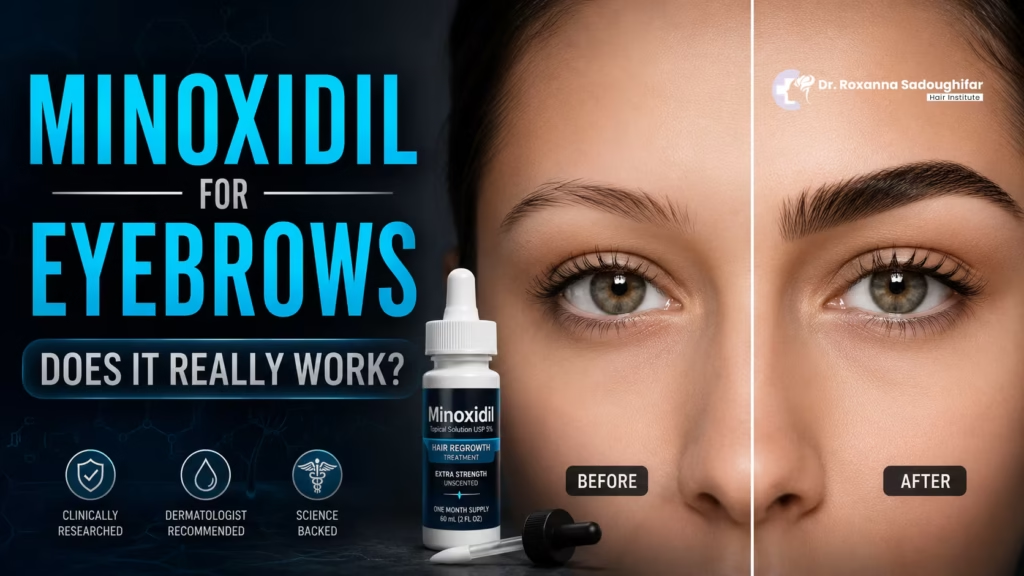
Thick, well-defined eyebrows have become an important part of facial aesthetics for both men and women. As a result, many people experiencing thin, patchy, or sparse eyebrows are searching for effective solutions to restore eyebrow density and improve their appearance. One of the most commonly discussed treatments is Minoxidil, a hair growth medication widely used for scalp hair loss. But can Minoxidil help improve eyebrow growth as well? Let’s explore how it works, the potential benefits, and when a more permanent solution such as an Eyebrow Transplant in Tehran may be the better option. What Is Minoxidil? Minoxidil is a topical medication originally approved for the treatment of androgenetic alopecia, commonly known as male and female pattern hair loss. Over the years, millions of people worldwide have used Minoxidil to: Although Minoxidil was developed primarily for scalp hair loss, many individuals have reported noticeable improvements when applying it to other areas, including the eyebrows. How Does Minoxidil Affect Eyebrows? Minoxidil works by stimulating hair follicles and improving blood flow around the application area. When applied carefully to the eyebrows, it may help: Many users with naturally thin eyebrows or mild eyebrow hair loss have reported positive results after consistent use. However, results can vary significantly from person to person. Important Safety Considerations The eyebrow area is extremely sensitive because it is located close to the eyes. When applying Minoxidil to eyebrows, caution is essential. Experts generally recommend: Improper application can cause irritation, redness, or discomfort. Foam vs. Liquid Minoxidil for Eyebrows Many users prefer foam formulations over liquid versions for eyebrow applications. Potential advantages of foam include: Liquid formulations may contain ingredients that can increase irritation around the delicate eyebrow area. Regardless of the formulation used, careful application is critical. When Minoxidil May Not Be Enough While Minoxidil can help improve eyebrow density in some individuals, it may not provide satisfactory results for everyone. People with: may require a more advanced solution. In such cases, an Eyebrow Transplant in Tehran can offer a long-lasting and natural-looking result. Why Eyebrow Transplantation Is Growing in Popularity Eyebrow transplantation has become one of the fastest-growing cosmetic hair restoration procedures worldwide. During the procedure, healthy hair follicles are carefully extracted from the donor area and implanted into the eyebrow region to create fuller, naturally shaped eyebrows. Benefits include: Patients seeking fuller eyebrows often choose eyebrow transplantation when topical treatments have failed to provide adequate improvement. Choosing the Best Hair Transplant Surgeon in Iran The success of an eyebrow transplant depends heavily on surgical expertise. Selecting the Best Hair Transplant Surgeon Iran offers several advantages: Since eyebrow hair grows at very specific angles, the surgeon’s experience and attention to detail play a crucial role in achieving a natural appearance. Tehran: A Leading Destination for Hair Restoration Tehran has become a recognized center for advanced hair restoration procedures, attracting patients from across the Middle East, Europe, and Asia. The city offers: As a result, Tehran’s leading eyebrow transplant has become an increasingly popular option for patients seeking natural and permanent eyebrow restoration. Conclusion Minoxidil may help improve eyebrow growth for some individuals, particularly those experiencing mild thinning or sparse eyebrows. However, results are not guaranteed, and proper application is essential to avoid irritation around the eyes. For individuals seeking a permanent solution, eyebrow transplantation remains one of the most effective treatments available today. Whether you are considering topical treatments or an Eyebrow Transplant, consulting with the Hair Transplant Surgeon can help you determine the most appropriate solution based on your individual needs and aesthetic goals. Healthy, fuller eyebrows can significantly enhance facial appearance—and the right treatment can help you achieve lasting results.
Hair Loss from Ozempic, Mounjaro, Wegovy—Myth or Fact?
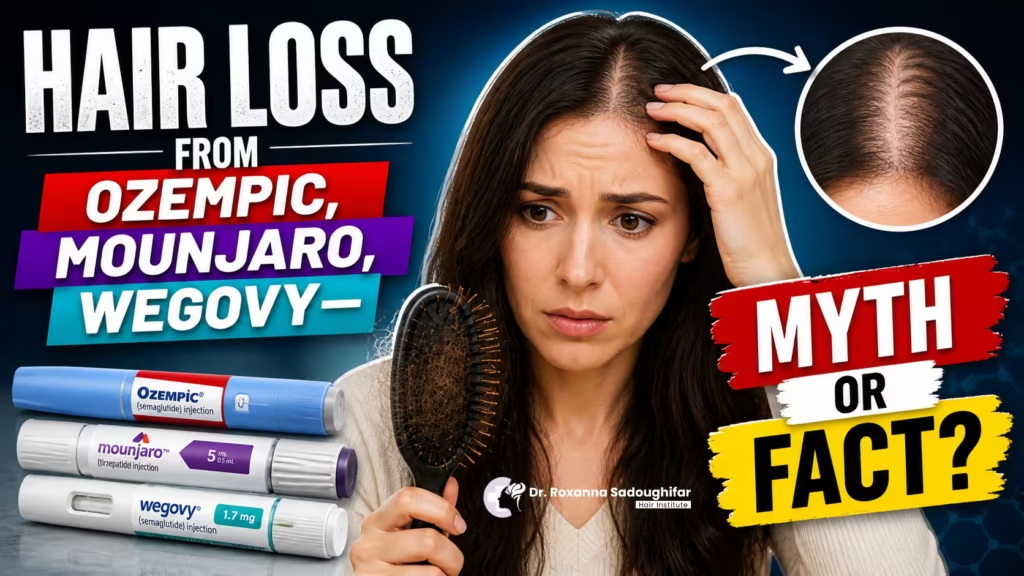
Weight loss medications like Ozempic, Mounjaro, and Wegovy have rapidly become some of the most talked-about treatments worldwide. From dramatic before-and-after transformations to life-changing health improvements, these drugs are often described as “miracle injections.” But alongside the success stories, a growing number of users are sharing a less expected experience—noticeable hair loss. This has raised an important question: Are these medications actually causing hair loss, or is something else happening inside the body? To understand the reality, it’s important to separate facts from assumptions. Understanding How These Drugs Work Ozempic and Wegovy are based on semaglutide, while Mounjaro contains tirzepatide. These medications primarily work by regulating insulin, slowing down digestion, and significantly reducing appetite. As a result, people consume fewer calories and lose weight—often at a rapid pace. While this process is highly effective for weight loss, it also creates sudden changes in the body’s internal balance. And that’s where hair health can be affected. Is Hair Loss a Proven Side Effect? Hair loss is not officially listed as a major side effect of Ozempic. However, clinical observations suggest a pattern: Although these numbers are relatively small, they confirm that hair loss is being noticed by real users—and it deserves attention. The Real Cause: Not the Drug, But the Weight Loss The most important point to understand is that these medications do not directly damage hair follicles. Instead, the issue is linked to rapid weight loss and physical stress on the body. When the body experiences sudden changes—whether from dieting, surgery, or medication—it reacts by conserving energy for essential functions like the brain and heart. Hair growth, being non-essential, temporarily slows down. This condition is medically known as telogen effluvium. What Is Telogen Effluvium? Telogen effluvium is a temporary form of hair shedding triggered by stress or sudden physiological changes. In this condition: This is why some individuals report losing “clumps” of hair after starting weight loss medications. Importantly, this condition is reversible. The Role of Nutrition in Hair Loss Another major factor contributing to hair loss is reduced nutrient intake. Because these medications suppress appetite, many people unintentionally eat far less than their body needs. Over time, this can lead to deficiencies in essential nutrients such as: Hair follicles require these nutrients to stay strong and active. Without them, hair becomes weak, thin, and more prone to shedding. Why This Happens in Other Weight Loss Methods Too Hair loss during rapid weight loss is not unique to Ozempic or Mounjaro. It has long been observed in: In all these cases, the underlying cause remains the same: sudden stress + nutritional imbalance. Is the Hair Loss Permanent? The reassuring answer is—no, in most cases it is not permanent. Hair shedding typically begins a few months after rapid weight loss and slows down once the body stabilizes. As nutritional balance improves, hair growth gradually resumes. Most individuals see noticeable recovery within a few months, provided proper care is taken. How to Protect Your Hair During Weight Loss If you are using these medications, a mindful approach can make a significant difference. Maintaining a balanced diet is essential. Even with reduced appetite, prioritizing protein-rich foods, leafy greens, and whole foods helps support hair health. Ensuring adequate intake of iron, biotin, zinc, and vitamin D is equally important. Avoiding extreme calorie restriction and focusing on steady, sustainable weight loss can reduce stress on the body. In addition, managing overall stress—both physical and emotional—plays a key role in preventing excessive shedding. When Should You Seek Professional Help? While temporary shedding is common, persistent or worsening hair loss should not be ignored. If hair thinning continues for several months or becomes visibly noticeable, consulting a specialist is the right step. Many individuals exploring long-term solutions often consider advanced treatments. Visiting the Best Hair Transplant Clinic in Tehran can provide access to modern techniques and personalized care. Similarly, consulting an experienced Hair Transplant Surgeon in Iran ensures accurate diagnosis and tailored treatment plans based on individual needs. Conclusion The growing concern around hair loss and weight loss drugs is understandable, but the science offers clarity. These medications do not directly cause baldness. Instead, the body’s response to rapid weight loss, combined with nutritional changes, leads to temporary hair shedding. With proper diet, care, and awareness, this phase is usually short-lived—and hair growth returns naturally. The key lies in understanding your body, supporting it with the right nutrients, and seeking expert advice when needed. Frequently Asked Questions (FAQs)
How to Choose the Right Eyebrow Shape for a More Defined Look
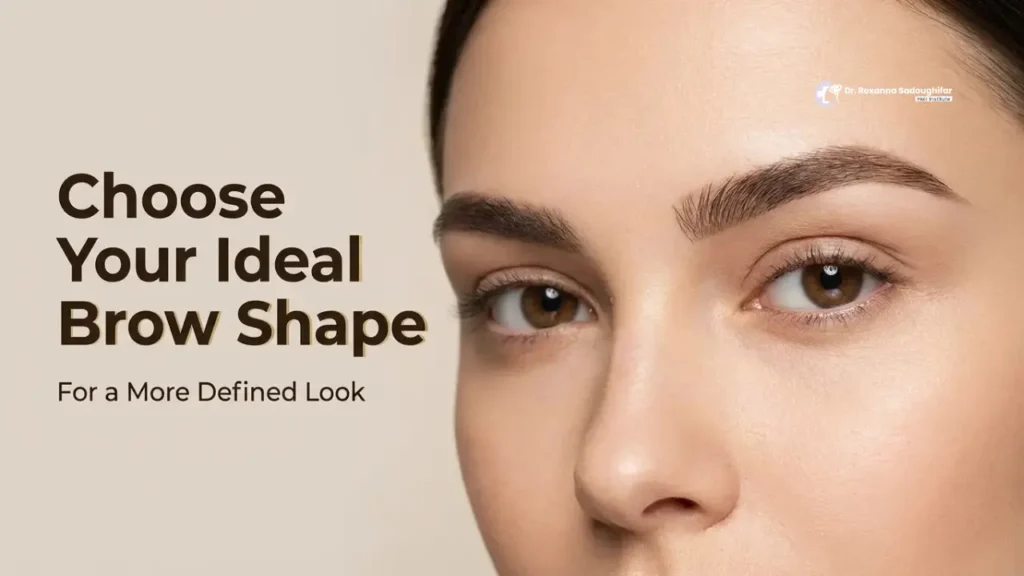
Choosing the right eyebrow shape to suit your face is half the battle, because beautiful eyebrows can instantly change the expression of your face, whether it makes you look sweet and gentle, sharp and intense, or sharp and powerful. Understanding eyebrow shapes and choosing the appropriate style is both an art and a science that everyone should know to achieve the most perfect overall result of beautiful eyebrows. Key Takeaway Why do eyebrow shapes affect the face? Eyebrows are truly the crown of the face. Anatomically, the eyebrow area contains the Frontalis and Corrugator supercilii muscles, which control emotional expression. Designing beautiful eyebrows that complement the position of the muscles and orbital rim can make the face appear lifted and brighter. Therefore, eyebrow shape isn’t just about fashion, but about balancing the depth and contours of the face for a softer, more pleasing look. Eyebrow Shapes: Types & Which Make You Look Younger or Edgier Nowadays, there are many popular eyebrow shapes, each with its own unique characteristics and distinct feel. Before choosing the perfect eyebrow shape, it’s important to understand each shape well so you can select one that suits your personality and face shape. Arched eyebrows An arched eyebrow shape has its curve at approximately two-thirds of its length from the inner corner of the eyebrow. This shape gives a sharp, radiant, and mature look. It’s especially suitable for those with round faces as it helps to elongate the facial proportions and make them appear slimmer. This shape also helps to open up the eyes, making them look bigger and more alert. However, if it’s too arched, it can unintentionally create a stressed appearance. Thick eyebrows with short tails. Thick, short-tailed eyebrows are a popular natural eyebrow style these days. They emphasize density at the head and middle of the eyebrow, while the tail is short and sharp, giving a raw, strong, and natural look—similar to eyebrows that require minimal grooming. This style is very popular among both men and women who want to express their individuality. Straight eyebrows The currently trending Korean eyebrow style features straight eyebrows with little to no arch, drawn in a straight or slightly curved line from the inner corner to the outer corner. This gives a sweet, youthful look and is ideal for long faces that need to be softened. To best suit this face shape, avoid raising the tail of the eyebrow too high. Straight eyebrows with a downturned tail. This eyebrow style is a combination of straight and arched eyebrows, where the beginning and middle of the eyebrow are drawn straight, but the tail is slightly angled downwards. This creates a modern, edgy, yet vibrant look. It’s a style suitable for faces that want a blend of sweetness and coolness, and it’s a favorite among professional makeup artists. Rounded eyebrows Rounded eyebrows have a soft curve with no sharp angles. The curved lines form a gentle semicircle, giving a sweet, cute, and youthful look. This eyebrow shape is very popular among women for enhancing a sweet face and conveying a friendly feeling, perfect for those with a cute style. Long eyebrows with a slight arch at the tail. Long eyebrows with a slightly curved tail, often extending beyond the outer corner of the eye, exude elegance and sophistication. This style is ideal for a luxurious look, especially for women who want to appear older than their actual age. However, it’s important to maintain balance in length, ensuring it doesn’t become excessively long or unnatural. Fluffy eyebrows The natural eyebrow style that is very popular nowadays emphasizes the appearance of individual hairs, making the eyebrows look full, thick, and natural, without any rigid outlines. The technique often involves blending the eyebrow hairs upwards, creating a beautiful look effortlessly. It’s considered another trending Korean eyebrow style. Best Eyebrow Shape for Your Face The best way to shape your eyebrows to complement your face is to start by analyzing your own face shape. Each eyebrow shape is designed to create balance with different facial features. The basic principle is that the eyebrow shape should be the opposite of the most prominent features of your face. For example, a round face should choose arched eyebrows to add length, while a long face should choose straight eyebrows to soften its length. Oval face An oval face shape is considered the ideal in beauty standards because it has the most balanced proportions. The good news is that almost all eyebrow shapes suit an oval face, but the best are slightly arched eyebrows or long eyebrows with a curved tail, as these help maintain the already good proportions. Square face A square face has a jawline and forehead that are equally wide. Choosing a rounded eyebrow shape will help soften the harshness of the facial structure. Avoid straight or sharply angular eyebrows, as these will further accentuate the squareness of the face. Softly arched or rounded eyebrows are the best choices. Round face The best eyebrow shape for a round face is a high arch, which helps create a leading line that makes the face appear longer and slimmer. Avoid straight or flat eyebrows as these will only make the face look rounder. The inner corner of the eyebrow should be straight and not curve along the contours of the face. Long face For long faces, it’s best to soften the length with straight eyebrows or Korean-style eyebrows that aren’t highly arched. These create a horizontal line that makes the face appear shorter and more balanced. Avoid highly arched eyebrows at all costs, as they will make the face look even longer. Heart-shaped face Heart-shaped faces have a broad forehead and a pointed chin. Choosing eyebrow shapes with a low to medium arch and thickness near the inner corner will help soften the broad forehead. A recommended beautiful eyebrow style is a slightly curved eyebrow with an extended tail to create balance. Diamond-shaped face A diamond-shaped face has the widest cheekbones, while the forehead and chin
Justin Bieber’s Hairline: Modern Transplant Results
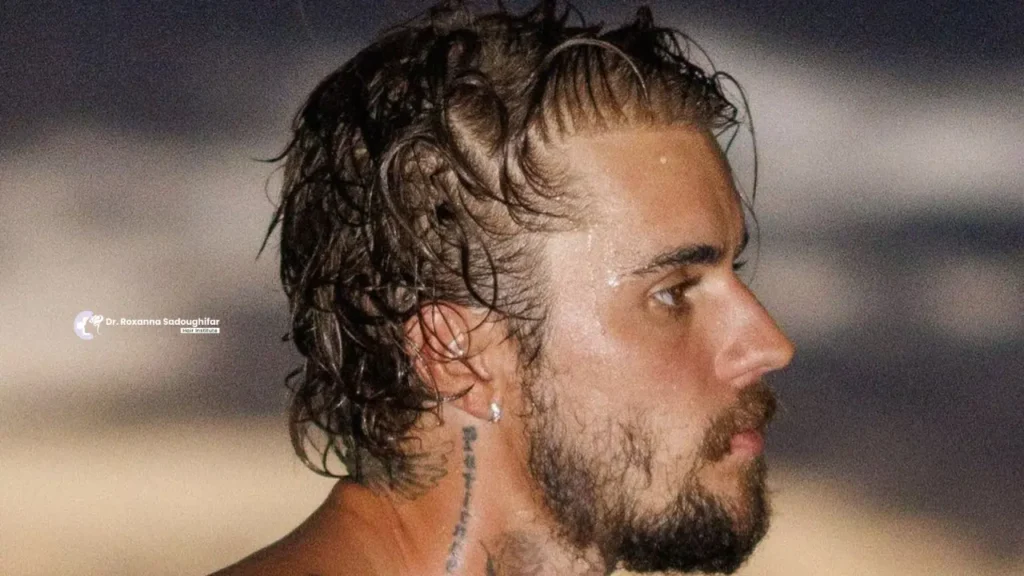
Hair loss is a reality for millions of men, including global celebrities. Over the years, fans and hair experts have closely followed changes in Justin Bieber’s hairline. His journey reflects how modern hair restoration has evolved—offering natural results without dramatically altering appearance. Today, advanced clinics such as Dr. Roxanna Sadoughifar Hair Institute, known for expertise in hair transplant in Iran, use precise and minimally invasive methods to restore hair safely. Early Signs of Hairline Maturation and Thinning Around 2017, the first signs of frontotemporal recession became noticeable. This pattern is commonly associated with androgenic alopecia, also known as male pattern baldness. It typically begins with slight recession at the temples and gradually progresses over time. By 2018, the hairline appeared more mature, consistent with early-stage hair loss. This stage is very common and often becomes the point when individuals start considering preventive treatments or restoration options. The Role of Hairstyles and Temporary Concealment In 2021, Justin Bieber wore dreadlocks for an extended period. Tight hairstyles can sometimes contribute to traction alopecia, which occurs when hair follicles experience continuous tension. After removing the dreadlocks, subtle differences in the temple area became more noticeable. Like many individuals, he appeared to use temporary cosmetic techniques to improve the appearance of density, such as: These methods do not treat hair loss but can help improve visual appearance temporarily. Understanding Modern FUE Hair Transplant Procedures Hair experts believe that subtle improvements seen later could be consistent with Follicular Unit Extraction (FUE), one of the most advanced and widely used restoration methods today. FUE involves extracting individual hair follicles from the donor area and implanting them into thinning regions. Because follicles are taken one by one, there is no large visible scar, and healing is faster compared to older methods. Clinics specializing Dr. Roxanna Sadoughifar Hair Institute, uses refined implantation techniques to ensure the hair grows naturally and matches the patient’s original pattern. Why Hair Transplant Results Look Natural Over Time Hair restoration does not produce instant density. Instead, it follows a gradual and natural growth cycle: This gradual process helps ensure that changes look natural rather than sudden or artificial. The Importance of Conservative and Strategic Planning One of the key principles in modern hair restoration is preserving the donor area while improving the hairline. Surgeons carefully plan graft placement to avoid over-harvesting and ensure long-term sustainability. This approach focuses on: Experienced institutes prioritize precision and long-term planning to achieve the best outcomes. What We Can Learn from Celebrity Hair Restoration Trends Celebrity transformations highlight how subtle improvements can enhance overall appearance without making changes obvious. Modern procedures are designed to restore confidence while maintaining a completely natural look. The goal is not to create artificial density, but to recreate a realistic hairline that blends seamlessly with existing hair. Conclusion: Hair restoration has become safer, more precise, and more natural than ever before. Whether addressing early hairline recession or more advanced hair loss, modern techniques provide reliable, long-term solutions.Leading centers such as Dr. Roxanna Sadoughifar Hair Institute continue to use advanced methods and personalized treatment planning to help individuals restore their hair and confidence with natural-looking results. FAQ
Ramadan Hair Care Guide for People Facing Hair Loss
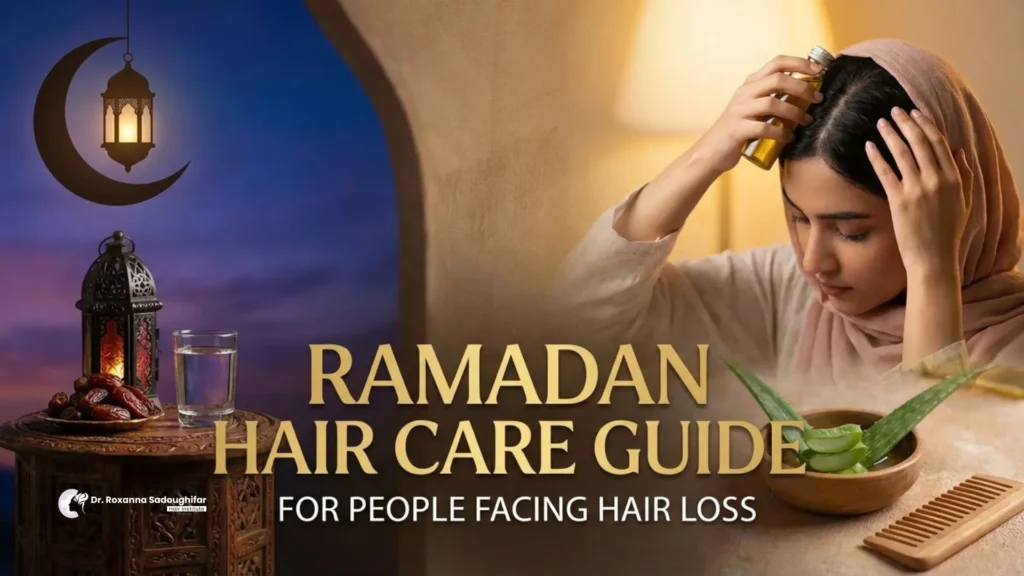
Ramadan is a holy and spiritually important month for Muslims around the world. However, for people experiencing hair loss, this time often brings many doubts and questions. Many patients ask whether they can continue their hair loss treatments while fasting, especially when using topical solutions or taking medicines. If you are consulting a Hair Transplant Surgeon, you may also receive similar questions from patients. This guide explains a safe and practical routine so that your fast remains valid while your hair regrowth treatment continues smoothly. Common Concerns About Hair Loss Treatment During Ramadan During Ramadan, hair loss patients are usually confused about: Let’s clear these doubts step by step. Can You Use Hair Solutions That Contain Alcohol? Many hair growth solutions contain a small amount of alcohol as a carrier ingredient. This alcohol helps the medicine absorb quickly into the scalp. The important point to understand is: Because of this, most medical experts agree that using topical hair treatments does not break the fast. Best Time to Apply During Ramadan You can follow this simple routine: This routine helps maintain hair growth while respecting religious practices. Can You Take Multivitamins While Fasting? Hair health depends heavily on proper nutrition. Many hair loss patients are advised to take vitamins and supplements. During Ramadan: This way, your hair receives proper nutrition without affecting your fast. What About Hair Loss Medicines? Some hair loss medications are taken once daily. These can still be used safely during Ramadan by adjusting the timing. Recommended Schedule This ensures continuous treatment without interrupting fasting. Why Consistency Matters for Hair Regrowth Whether you are undergoing medical treatment, consistency is key. Stopping treatments during Ramadan may lead to: By simply adjusting the timing, you can continue treatment safely. Expert Advice from a Hair Transplant Surgeon According to experienced Hair Transplant Surgeons, patients should never discontinue treatment without medical advice. Key recommendations include: These steps help maintain healthy hair growth even during fasting. Conclusion Ramadan is a time of devotion, but it does not mean you must stop caring for your health. Hair loss treatments can safely continue if you follow the right schedule.With proper guidance, you can protect both your fast and your hair growth. If you have doubts, always consult a qualified specialist at a trusted Clinic Hair Transplant Tehran.
Harry Styles Hairline: Wig, Baldness, or Transplant?
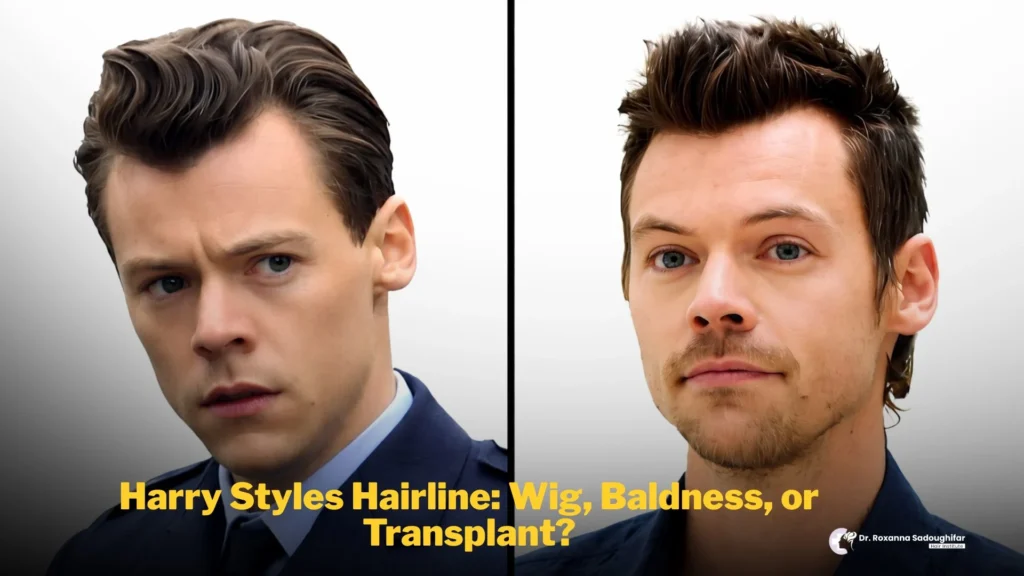
Every few months, the internet finds a new celebrity “hair conspiracy.” This time, it’s Harry Styles. Some people insist he’s secretly bald. Others claim he’s been wearing a wig for years. A few even believe every hairstyle change is just clever styling hiding major hair loss. But when you step back and analyze his hair over time — year by year — the story looks far less dramatic and far more medical. In reality, Harry Styles’ hair journey tells us something much more interesting: how subtle, modern hair restoration can be today. If anything has changed, it hasn’t been obvious. And that’s exactly how good work should look. Understanding Harry Styles’ Natural Hairline Changes From his teenage years, Harry had what doctors call a strong juvenile hairline — thick density, sharp temporal peaks, and little recession. But as he entered his early twenties, a mild shift became noticeable. His temples began moving back slightly, especially on the left side. This isn’t unusual. In fact, it’s incredibly common. Most men naturally mature from a Norwood 1 to a Norwood 2 or 3 pattern as they age. It doesn’t mean baldness. It simply means the hairline becomes more adult and less straight across. The problem is that fans often mistake this normal change for severe hair loss. Looking at Harry’s progression over the years, his crown has consistently remained dense, his mid-scalp strong, and his overall coverage impressive. These are not the signs of someone going bald or relying on a wig. Wigs tend to look too perfect. Hairpieces often create unnaturally straight hairlines. Harry’s hair, on the other hand, shows irregularity, fine baby hairs, and slight asymmetry — details that are extremely difficult to fake. Did Harry Styles Get a Small Hair Transplant? What’s interesting, though, is the subtle improvement that appeared after he shaved his head in 2023. When his hair grew back, the previously deeper recession on his left temple looked softer and more balanced. Not dramatically different — just more symmetrical. And that’s where professional analysis becomes important. If there was any procedure involved, it likely wasn’t a massive transplant. It wouldn’t have required thousands of grafts. Instead, it may have been a small refinement — perhaps 200 to 500 grafts using modern FUE techniques — simply to even out the contour of the hairline. This type of “micro-transplant” is becoming increasingly popular among celebrities because it enhances shape without changing identity. Today’s hair restoration isn’t about creating a brand-new hairline. It’s about restoring balance so naturally that nobody can tell anything was done. This is exactly the philosophy followed by experienced Hair transplant Surgeons around the world. The best results are not dramatic. They’re subtle. The goal is for people to say, “You look good,” not “Did you get surgery?” How Modern Hair Transplant Techniques Create Natural Results With advancements in FUE and minimally invasive procedures, patients can now return to normal life quickly with almost no visible scarring. These techniques are widely practiced not only in Hollywood or London, but also internationally. In recent years, hair transplant in Iran has gained significant recognition, with skilled surgeons, modern clinics, and advanced technology attracting patients from different countries who want high-quality treatment at reasonable costs. The focus, just like in celebrity cases, is on natural density, careful planning, and long-term preservation of donor hair. Harry Styles’ case — whether he had a small procedure or simply benefited from styling and good genetics — highlights an important truth about modern hair care. Hair loss doesn’t always require extreme solutions. Sometimes medication can stabilize it. Sometimes a minor surgical correction is enough. And sometimes, nothing needs to be done at all. Final Thoughts: Bald Rumor or Just Smart Hair Care? The real takeaway is this: hair restoration today is precise and artistic. When performed by an experienced Hair transplant Surgeon, even a transplant can remain virtually undetectable. So is Harry Styles bald? Almost certainly not.Is he wearing a wig? Highly unlikely.Could he have had a tiny, well-planned refinement? Possibly. But if he did, that only proves how far the field has come. Because the best hair work is the kind no one ever notices — it simply looks like you were born that way.
Botox & Dermal Fillers: Magic or Marketing?
In today’s world, looking youthful is no longer limited to celebrities. With the rise of aesthetic medicine, treatments like Botox and dermal fillers have become increasingly popular among people of all ages. However, despite their popularity, there is still a lot of confusion, misinformation, and hesitation surrounding these procedures. This topic is important because cosmetic treatments are deeply personal choices. Before deciding on any procedure, it is essential to understand what it is, how it works, and what risks may be involved—rather than relying solely on online searches or social media trends. What Are Botox and Dermal Fillers? Botox and dermal fillers are non-surgical aesthetic treatments designed to reduce signs of aging and enhance facial features in a natural way. How Dermal Fillers Work Dermal fillers are most commonly made from hyaluronic acid, a substance that naturally exists in our skin. Hyaluronic acid helps maintain skin hydration, volume, and elasticity. As we age: Dermal fillers restore lost volume by replenishing hyaluronic acid in specific areas of the face. This results in: Since hyaluronic acid is naturally present in the skin, fillers are generally considered safe when performed correctly by trained professionals. What Does Botox Do? Botox works differently from fillers. It targets dynamic wrinkles—those caused by repeated facial movements such as smiling, frowning, or raising eyebrows. Botox helps by temporarily relaxing specific facial muscles, which: When used appropriately, Botox does not freeze the face but allows for natural expressions with reduced wrinkles. The Importance of Balance and Proportion Overuse of fillers or Botox can lead to an unnatural appearance, such as: Aesthetic treatments should always respect facial proportions. The goal is enhancement—not exaggeration. This is why expertise, experience, and artistic judgment are critical. What to Know Before Getting Botox or Fillers 1. Who Is Performing the Procedure? Botox and fillers are medical treatments, not beauty services. If administered incorrectly, they can cause: Always choose a qualified and experienced dermatologist in Tehran who is properly trained in aesthetic injectables. 2. Where Is the Treatment Being Done? Hygiene and medical standards matter. Procedures must be performed in a clean, well-equipped clinical environment to reduce the risk of infection and complications. 3. Is Botox or Filler Enough for Everyone? Not all faces age the same way. While Botox and fillers can deliver excellent results, some individuals may benefit from: A proper facial assessment and personalized treatment plan are essential for optimal results. Why Botox in Tehran Is Gaining Popularity Interest in Botox in Tehran has grown significantly due to: Patients increasingly seek expert care from an experienced dermatologist in Tehran who understands both facial anatomy and aesthetic balance. Final Thoughts Botox and dermal fillers are not miracles—but in the right hands, they can deliver safe, subtle, and highly satisfying results. The key lies in: Before undergoing any cosmetic procedure, take the time to understand your options and choose a qualified professional. When done responsibly, aesthetic treatments can enhance confidence while maintaining your natural appearance.
What Can Be Worse Than a Bad Hair Day Ladies? – Receding Hairline & Thinning Hair !!!!
When hearing people talk about receding hairline or hair thinning, most of us link it to men’s issues. But it is not, because it is becoming a serious issue for women as well. For women, hair is like an ornament that enhances their beauty and self-confidence. If having just a bad hair day can ruin the whole day for you, then we can imagine how difficult and heartbreaking it can be to have a lifelong hair problem – a receding hairline and thinning hair. However, you are not the only one facing this problem; it is affecting a significant number of beautiful ladies around the world, including women who later explore advanced solutions such as hair transplant Iran when medical treatments are no longer enough. Nevertheless, understanding the core causes of thinning hair and receding hairline in women is important before deciding to get the right treatment. This piece of writing is for you to learn some of the major reasons for receding hairline and thinning hair disorders among women. Understanding the “Why” Behind a Receding Hairline in Women Let us walk you through the understanding of the main causes of thin hair and receding hairline in women, so you can relate your symptoms and comprehend your specific reason, which can help you interpret your condition to your dermatologist, so you can get the right treatment. 1. Female Pattern Hair Loss (Androgenetic Alopecia): The causes can vary from woman to woman, but one of the most common reasons is Androgenetic Alopecia, which is also known as Female Pattern Hair Loss. It is genetic and related to hormones, where the sensitivity is increased to androgens among females, and they start to lose hair on the top of their scalp. It can also be seen causing a receding hairline in women worldwide. As it is genetic, it can be from either parent. It is confused with having too many male hormones by many, but it is not. It is rather about follicular sensitivity to dihydrotestosterone (DHT). 2. Traction Alopecia: There is another alopecia that is self-inflicted. In many cultures, women are not allowed to keep their hair unbraided, and fashion demands have also encouraged women to tie their hair aggressively into ponytails, buns, braids and many other types of hairstyles. This regular pulling of hair causes inflammation to hair follicles and can lead to permanent damage. Overuse of hair tools that pull hair while using is also causing damage to follicles, for example, hair straighteners, which require an aggressive pull of hair while pressing to get the best results. However, doing the same to your hair every day can cause traction alopecia. 3. Hormonal Fluctuations: There are many significant life events that can shift hormone levels dramatically, namely, pregnancy, childbirth, and menopause. Health problems like thyroid issues can also cause dramatic fluctuations in hormone levels. A drop in estrogen level, which helps hair grow, can lead to significant shedding and thinning hair, resulting in a receding hairline in women. How to deal with it? Many of us have the tendency to ask people around about their hair issues and start buying the same products that worked for them, but before you start spending a fortune on products that may not even be suitable for your cause of hair thinning, booking an appointment with a board-certified dermatologist is the wisest step you will ever take. They are the medical experts on skin, hair, and nails, constantly helping people deal with these issues every day. They can properly diagnose the cause of your thinning hair or receding hairline. What to Expect During Your Visit: At last, a thing to remember is that your hair is definitely a part of you, but it does not define you. By taking informed, proactive steps, you can reclaim control and confidence on your journey to healthier hair. Frequently Asked Questions (FAQs)